We are registering for the 2026-2027 School Year!
The Day School at
ThinkerStudio
A Full-Time K-8 Learning Immersion
The Vision
ThinkerStudio Learning Lab is a full-time, learner-centered program for students in grades K–8. We move away from the traditional "one-size-fits-all" classroom to provide an environment focused on community, personalized-learning, inquiry-based learning, and creative problem-solving. Our goal is to prepare students for the real world by teaching them how to think critically and take ownership of their own learning.
Program Options & Cohorts
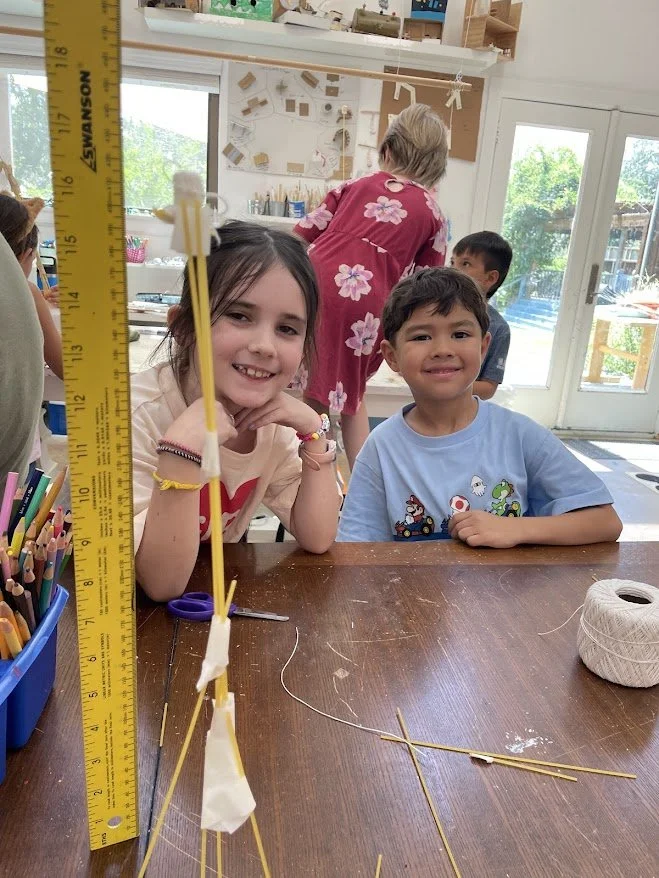
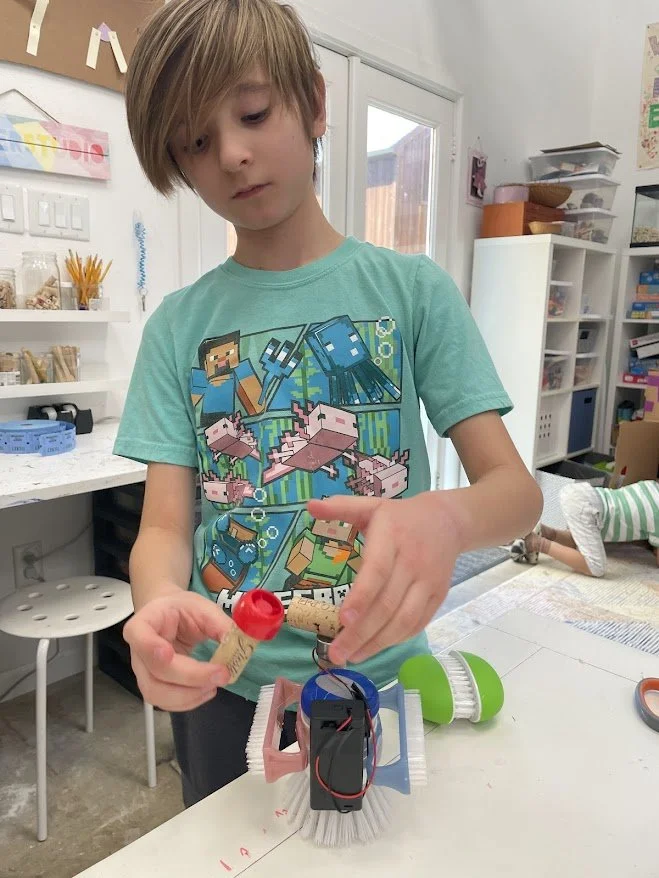
To ensure high-fidelity instruction and strong peer relationships, our Day School is organized into three distinct multi-age cohorts:
Lower Elementary: K – 2nd Grade
Upper Elementary: 3rd – 5th Grade
Middle Years: 6th – 8th Grade
Your Choice of Schedule:
The 4-Day Core (Monday – Thursday): Our primary academic block. Students focus on inquiry-based projects, integrated literacy, and hands-on work in our makerspace.
Program times:
Daily Schedule: 8:00-2:30
Soft Arrival between: 8:00-8:30
Pick-up between: 2:30-2:45
Tuition:
$800/month August-May (or $8,000 for the year)
Admissions:
Because we prioritize deep, personalized attention and are optimizing our home-based studio property this year, on-site spots are strictly limited to keep cohort sizes exceptionally small.
Step 1: Intent to Enroll
All families must be added to our community database before accessing the registration portal. If you haven't yet, complete your Intent to Enroll form.
Step 2: Jovial Portal Registration
Once on our list, you will receive direct access to our Jovial Portal to input your family profile, select your preferred program, and secure your place in queue.
The Village Connection
At ThinkerStudio, we don't just enroll students; we welcome families. Our Village Model thrives because parents are active participants in our learning ecosystem. We invite you to stay connected to your child's journey and the health of our studio through two levels of engagement:
1. The General Village Commitment (All Families)
To maintain our "Campus without Walls" and keep our community strong, all families commit to 40 hours of service per year. This isn't just about "volunteering"—it’s about being present in the environment where your child is growing.
Ways to stay connected include:
Studio Support: Assisting with makerspace organization or "resetting" the lab for new projects.
Expert Arcs: Sharing a professional skill or hobby during an afternoon inquiry session.
Community Advocacy: Helping coordinate our presence at local events like the Art Car Parade or Earth Day Houston.
Campus Without Walls: Serving as a walking chaperone for neighborhood excursions to local art institutions and makerspaces.
The Daily Rhythm: How We Learn Together
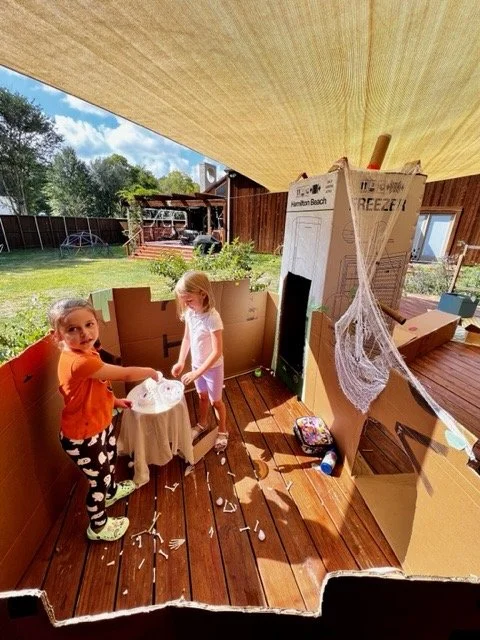
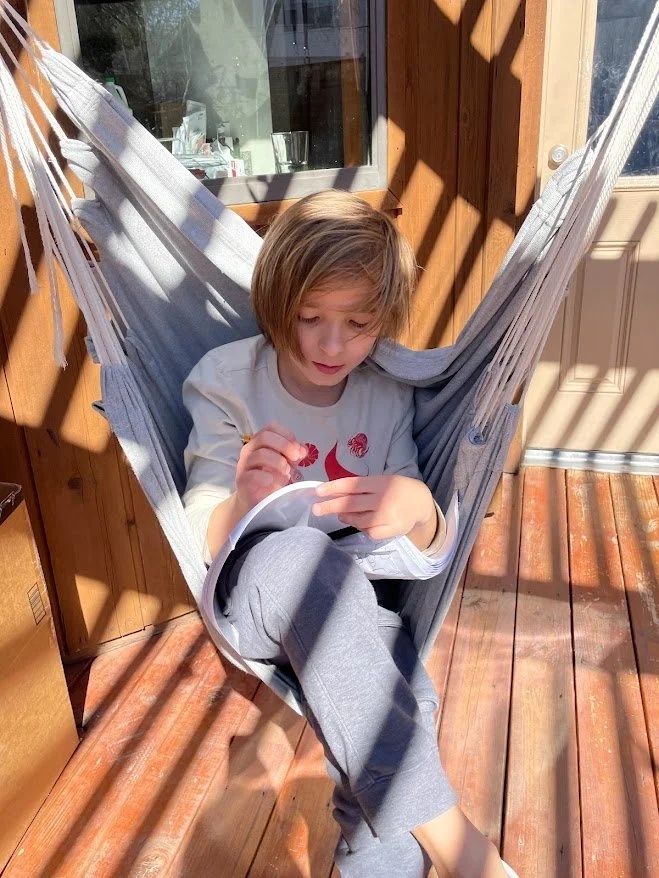
Moving Beyond the Single Classroom
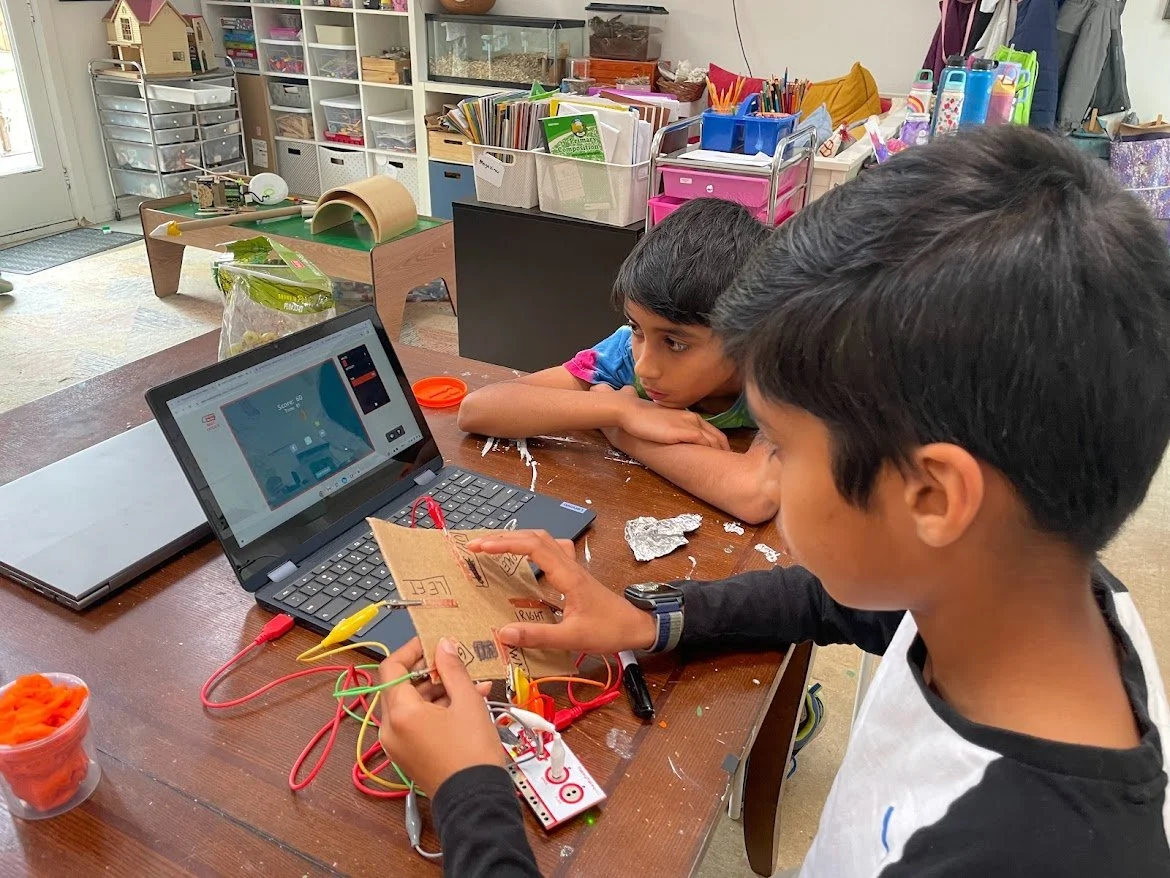
At ThinkerStudio, we move away from the traditional "one-room, one-teacher" box. Because we believe learning should be active and playful, our students do not stay at a fixed desk or with a single instructor all day. Instead, they move intentionally between specialized environments—inside and out—based on the work at hand.
Why This Matters:
Expert Arcs: Students engage with different "Artisans" (teachers) who bring specialized mastery to different parts of the day. This models the professional world, where we collaborate with various experts to solve complex problems.
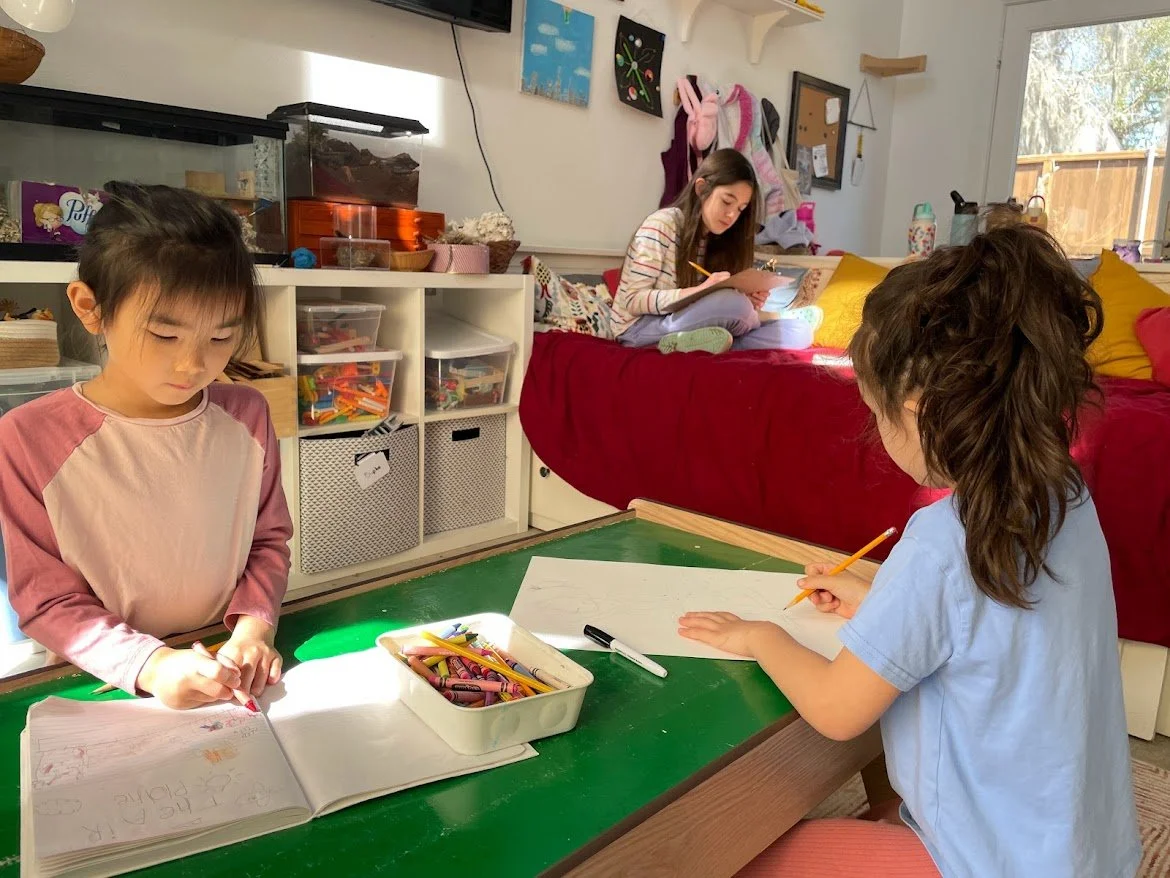
The Environment as the Third Teacher: Inspired by the Reggio Emilia philosophy, we view our physical space as a vital part of the teaching team. Our environments are intentionally designed to spark curiosity, facilitate independent discovery, and "narrate" the learning process back to the student.
Deep Work Cycles: By moving between "Zones of Thought" rather than fixed classrooms, students develop the focus and stamina required for high-level creative work.
A Typical Day:
The Soft Entry & Morning Huddle We begin each day by grounding our community. Before picking up a tool or a book, we focus on building a culture of connection. This is a time for students to check in, set their intentions, and ensure they are emotionally ready for a day of deep work.
Collaborative Inquiry & Literacy In this block, literacy, humanities, and research are woven together. Rather than staying in fixed grade levels, students work in fluid groups based on their cohort and their specific learning focus. This is a community effort; our Artisans (teachers) collaborate constantly to support students in different ways, ensuring every child has the guidance they need for their specific project.
Community Lunch & Connection We gather as a full school community to share a meal and build relationships. This is followed by a significant block of Unstructured Play. We treat this time as a vital "Zone of Thought" where students lead their own movements and social interactions, practicing the negotiation and leadership skills they use in the studio in a completely open-ended environment.
The MakerStudio: Integrated All Day At ThinkerStudio, "making" isn't an elective or an afternoon-only activity—it is how we learn. Students utilize our specialized zones and makerspace all day long. Whether they are prototyping a solution for a science inquiry or building a physical representation of a story, the tools and the studio are always integrated into their learning process.
Visible Thinking & Studio Reset We end every day with reflection. Students "narrate" their growth by sharing what they discovered, where they struggled, and what they plan to do next. We then work together to "Reset the Studio," preparing our environment—the Third Teacher—for a fresh day of discovery tomorrow.
The Importance of Unstructured Play
At ThinkerStudio, we protect time for unstructured play because we know it is essential for a child’s development. While our day is filled with intentional making and inquiry, we provide consistent "open-ended" time where students lead the way.
Social Negotiation: Play is where students practice the "Social Fabric" of our village—learning how to collaborate, resolve conflicts, and advocate for their ideas without adult interference.
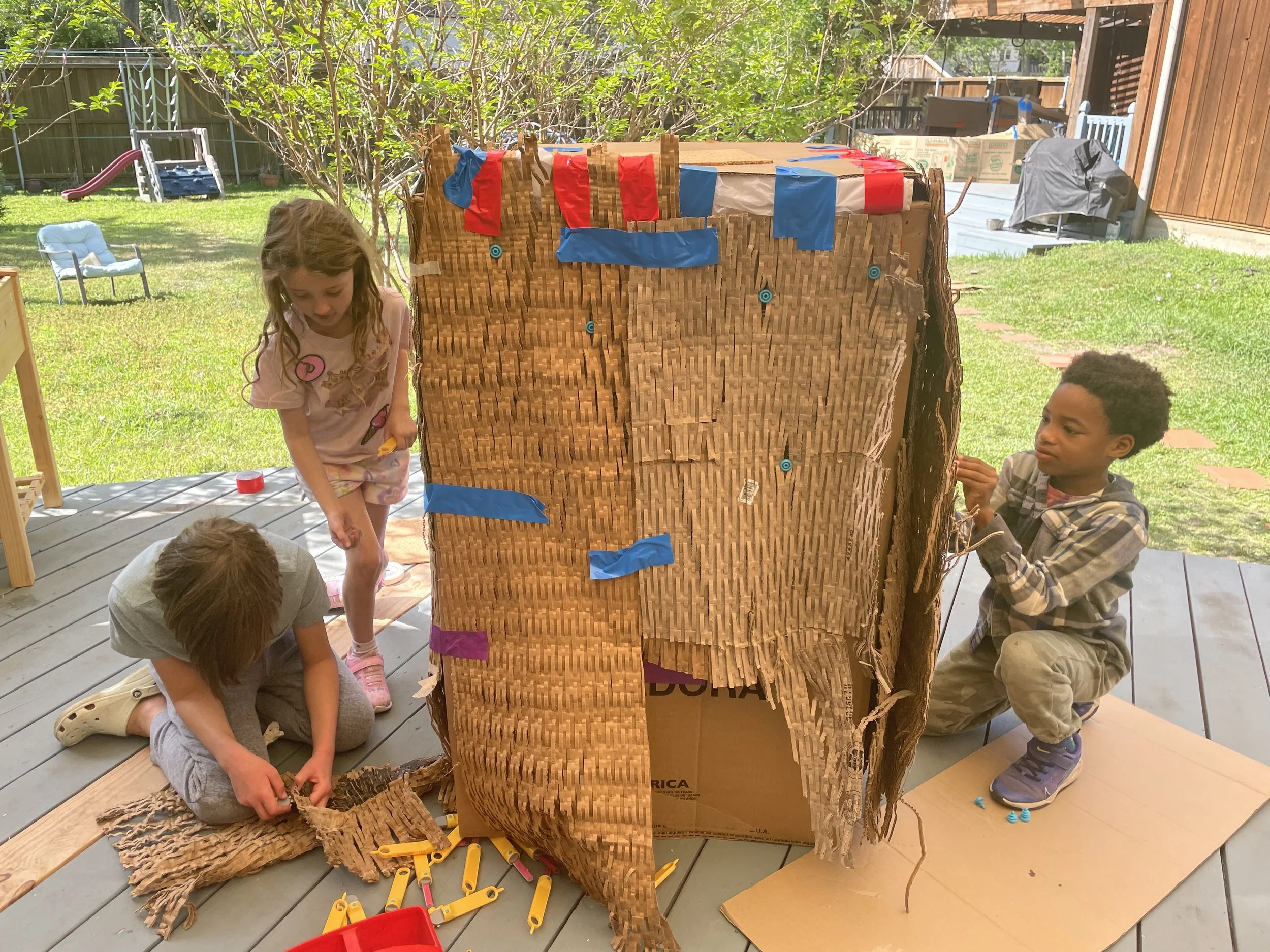
Risk & Imagination: Whether they are building a fort outside or inventing a new game in the studio, unstructured play allows students to take creative risks and test the boundaries of their imagination.
The "Rest" in the Rhythm: Just as professional creatives need downtime to spark new ideas, children need play to process what they’ve learned. This "breathing room" prevents burnout and keeps the joy of discovery alive.
Rethinking Assessment: Process Over Percentages
At ThinkerStudio, we move beyond the "check-the-box" mentality of traditional grades. We believe that a letter grade on a worksheet rarely captures the true depth of a student’s understanding or their ability to solve complex problems.
How We Measure Growth:
Competency-Based Mastery: We focus on "Durable Skills"—such as critical thinking, collaboration, and evidence-based reasoning. Students move forward when they have truly mastered a concept, not just because they spent a certain number of hours at a desk.
The Digital Learning Portfolio: Every student maintains a curated portfolio of their work. This is a living record of their growth, featuring photos of prototypes, drafts of writing, and videos of their presentations. This allows parents and Artisans to see the process of learning, not just the final result.
Qualitative Feedback: Our Artisans provide detailed, qualitative feedback rather than arbitrary numbers. This helps students understand exactly where they are succeeding and where they need to iterate.
Student-Led Conferences: Every 8 weeks, during our Studio Reset, students lead a conversation about their own progress. They "defend" their work, share their reflections, and set their own goals for the next cycle.
Does this mean my child won't have a transcript?
Not at all. While our internal daily work is focused on mastery and portfolios, we translate our competency-based data into traditional transcripts when the time comes for high school or college applications. This ensures our students are not only better prepared for the future but also fully equipped for their next academic steps.
The 8-Week "Studio Reset" Cycle
To maintain a high level of engagement and focus, ThinkerStudio operates on consistent 8-week cycles. This rhythm allows students to move through a complete arc of discovery—from initial inquiry and messy prototyping to final reflection.
Weeks 1–7 (The Build): Intense focus on the Inquiry Core and Technical Studio. Students are deep in their "Design Challenges," working with Artisans to master new skills and iterate on their projects.
Week 8 (The Reset): We transition from "Making" to "Reflecting."
Student Conference Days: During this week, we pause regular instruction for 1-on-1 portfolio reviews. Each learner meets with an Artisan to "defend" their growth, present their technical mastery, and set goals for the next 8-week cycle.
Artisan Professional Development: Our team uses this time to curate the "Third Teacher" (the environment), resetting the lab and specialized zones for the upcoming cycle's new provocations.
Campus Without Walls: The City as Our Classroom
At ThinkerStudio, we don't believe learning should be confined to four walls. Our "Campus Without Walls" model treats our local neighborhood and the city of Houston as an extension of our lab.
Instructional Field Trips & Community Research
Rather than traditional "once-a-year" field trips, our students engage in regular, purposeful excursions that align with their current 8-week inquiry cycle.
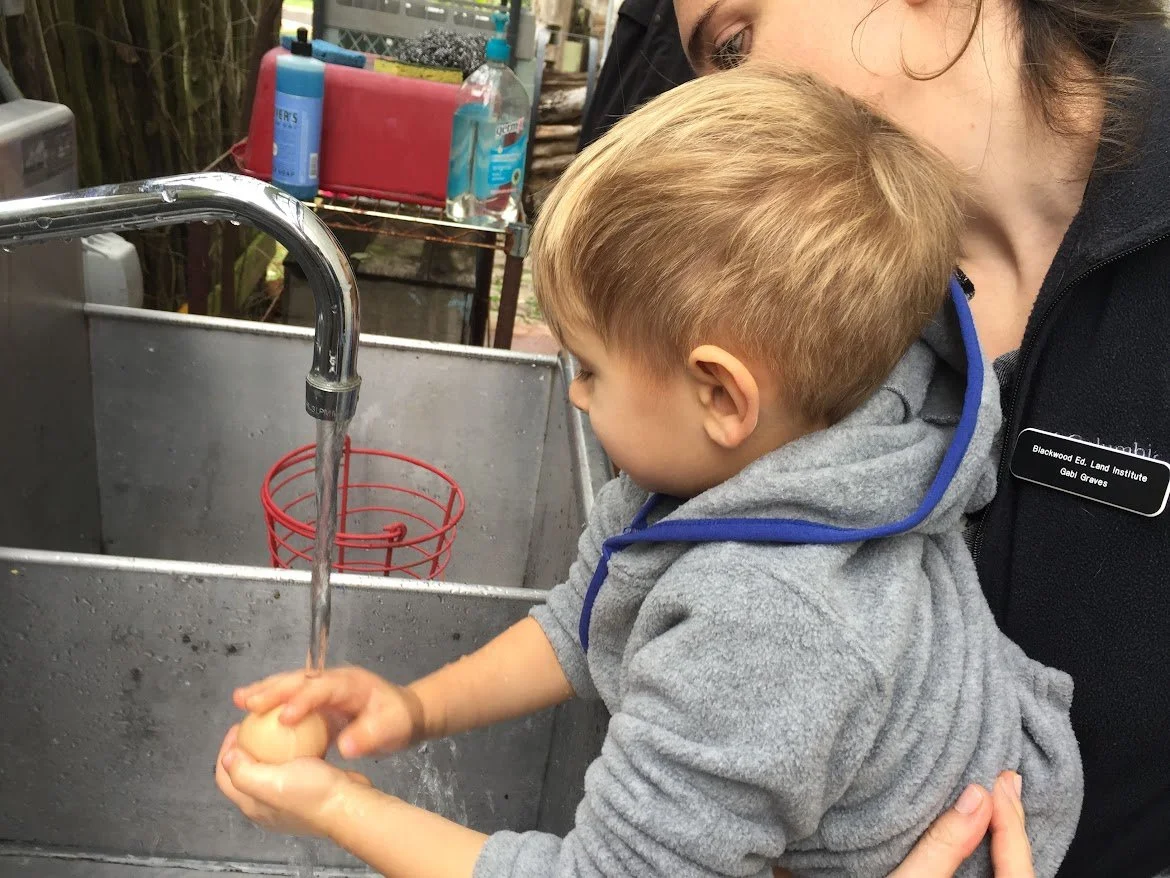
Contextual Research: If a cohort is studying soil science in their Botany cycle, they aren't just reading about it; they are in our school garden, at a local community garden or conservatory collecting samples.
Professional Exposure: Students visit local makerspaces, architectural firms, and artist studios to see "Technical Mastery" in action.
Walking Classrooms: Because we utilize our local environment daily, our students develop a sense of civic ownership and confidence navigating their community.
The 8-Week Culminating Trip
Each 8-week cycle concludes with a "Capstone Excursion." This trip serves as the final piece of the puzzle, allowing students to apply what they’ve learned in the studio to a real-world setting before they head into their Studio Reset week.
Joyful Discovery.
Academic Rigor. One School.
From the garden to the markerspace, we are redesigning school to be a place of active discovery. Your child becomes the driver of their own education.